
topurns.comCategoriesURNS

How to Choose the Right Pet Urn

How to Choose the Right Urn for Your Pet

Anyone who has truly loved an animal knows that we are never talking about "just a dog" or "just a cat.".

We're talking about a presence in the house. About a character. About a daily habit. About a look we knew well and about a four-legged companion who became a part of our lives.

That's why, when the time comes to say goodbye, many people have a hard time choosing what to do with their beloved pet's ashes. They have a hard time choosing an urn.

How do we choose the right pet urn?;

Should it be simple or personalized? Ceramic or metal? Should it match the home decor or be more reminiscent of the animal itself?;

There is no one right answer.

However, there is an option that best expresses your relationship.

In this guide I want to help you understand what is really worth paying attention to when choosing a dog or cat urn, without haste and without unnecessary exaggeration.

What should we consider before choosing a pet urn?;

What is the first question we should ask?;

Before you look at designs, colors, or prices, ask yourself:

What do I want to feel when I look at this object?;

This question matters more than it seems.

Someone may want a very discreet urn, which they will place in a quiet spot in the house.

Someone else, on the other hand, may want a real work of art that will be in a prominent place.

So, start with the feeling and then move on to the plan.

Don't just buy a container.

Choose an object that fits the memory you want to keep.

Why can a pet urn become a work of art?;

Isn't a simple urn enough?;

Of course, that may be enough.

However, many people want something more personal.

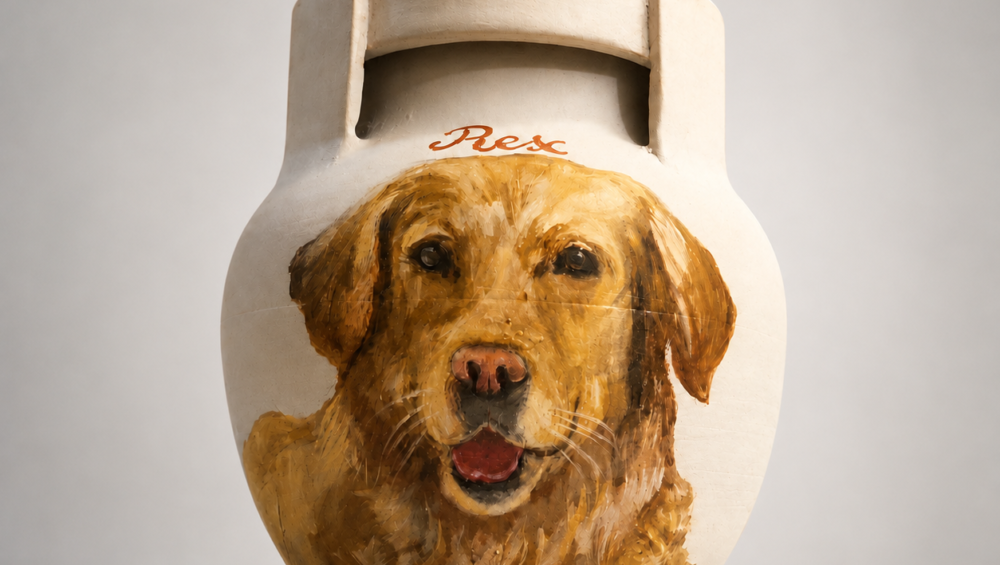
A handmade pet urn it can combine functionality, aesthetics and personal history.

The creator can use:

  • the pet's name,
  • his favorite color,
  • a special plan,
  • a footprint,
  • a dedication,
  • even his portrait.

Thus, the urn acquires character.

And, most importantly, it does not resemble a standardized mass-produced object.

Which material is best suited for a pet urn?;

Is there better material?;

No. There is a material that best suits your aesthetics and needs.

Today you can find pet urns from:

  • ceramic,
  • metal,
  • bronze,
  • wood,
  • glass,
  • stone,
  • biodegradable materials.

However, each material creates a very different effect.

Why choose a ceramic urn?;

What makes ceramic so special?;

Personally, I consider ceramic one of the warmest and most expressive materials for a keepsake object.

The artist molds the object, processes it, bakes it and can then paint it by hand.

This means that each piece can truly differ.

A handmade ceramic dog urn or a ceramic cat urn it can also acquire particular details associated with the specific animal.

For example, the creator can attribute:

  • the colors of the coat,
  • the characteristic eyes,
  • a specific expression,
  • a characteristic sign,
  • a favorite pattern.

Thus, the object acquires personality.

Is it worth choosing a personalized urn?;

What does personalization really mean?;

Personalization doesn't just mean writing a name on an urn.

It can mean much more.

For example, you can add:

  1. The pet's name.
  2. Life dates.
  3. A short personal phrase.
  4. Painted portrait.
  5. Colors that remind you of the animal.
  6. Footprint.
  7. A small symbol that matters to you.

However, it needs balance.

Personally, I prefer elegant personalization.

You don't have to fill an object with texts and symbols to make it personal.

Sometimes, a name and a really good portrait are enough.

How do we choose the right photo for a painted portrait?;

Does he take any photos?;

No.

If you want the artist to create a hand-painted pet urn, photography plays a crucial role.

Choose an image where:

  • the face is clearly visible,
  • there is good lighting,
  • the eyes look clear,
  • the true colors are visible,
  • there are no strong shadows.

Additionally, send two or three photos if you can.

This way, the artist better understands the details and personality of the animal.

Does the urn have to be an exact replica?;

Not necessarily.

Sometimes, a more artistic rendering best expresses the memory.

Therefore, don't just focus on photographic accuracy.

Also focus on the emotion you want the final work to convey.

How do we calculate the correct urn size?;

Does it have to do with the animal's weight?;

Yes.

The capacity of an urn must correspond to the amount of ash.

Therefore, before purchasing, inform the manufacturer of the approximate weight of the pet before cremation.

A professional can recommend the appropriate capacity for you.

At the same time, don't choose a size based solely on appearance.

First ensure that the urn meets the practical need and then consider the aesthetics.

Where can we place a pet urn?;

Do you need a special space?;

No.

And this is precisely one of the advantages of an artistic urn.

You can naturally incorporate it into your home.

For example, you can place it:

  • in a library,
  • on a beautiful shelf,
  • next to a photo,
  • on a console,
  • in a personal space,
  • in a small corner of memory.

What is a memory corner?;

You don't need to create anything complicated.

You can simply combine the urn with:

  • a favorite photo,
  • the animal's collar,
  • a small object,
  • a candle or discreet lighting.

This way, you create a space that reminds you more of the life you shared and less of the loss.

Does an urn have to look like an urn?;

Can it function as a decorative object?;

Of course.

Actually, this philosophy particularly interests me.

Why does a memorial object necessarily have to look like a traditional urn?;

A modern designer pet urn may remind you of:

  • ceramic sculpture,
  • ancient Greek vase,
  • decorative object,
  • abstract work of art.

Thus, the person can place the urn inside the house in a natural way.

At the same time, the object retains its own private meaning.

Why does a handmade urn cost more?;

Do we only pay for the materials?;

No.

This is a very common misunderstanding.

In a handmade product, the price includes:

  • the design,
  • the work,
  • technical knowledge,
  • the materials,
  • the processing stages,
  • painting,
  • personification,
  • the time of creation.

Furthermore, the creator does not produce thousands of absolutely identical objects.

He makes small series or even unique pieces.

Therefore, when comparing prices, compare similar products.

An industrial urn and a handmade artistic object do not belong in the same category.

How do we recognize a truly quality pet urn?;

What should we check before buying?;

Before choosing, consider:

  1. The material.
  2. The method of construction.
  3. The capacity.
  4. The closing safety.
  5. The possibility of personalization.
  6. The quality of the painting or engraving.
  7. The production time.
  8. The packaging.
  9. The experience of the creator.
  10. The aesthetic consistency of the brand.

Additionally, look carefully at actual product photos.

Don't rely only on descriptions.

Should we choose an urn immediately after the loss?;

Do we need to rush?;

No.

The choice of a pet memorial urn it is a personal decision.

You don't need to take it within the first few hours or days.

If you're not ready, give yourself time.

Look at different designs. Think about where you want to place the urn. Choose the photos you love the most.

Then, decide.

Rushing rarely helps when choosing something so personal.

Why was the TopUrns.com philosophy created?;

For me, the urn should not be an object that someone wants to hide.

It can become a beautiful object that tells a story.

This is precisely the philosophy expressed by TopUrns.com.

Art, handmade creation, and the ability to personalize can transform a pet urn into a special keepsake.

Why each pet was different.

He had a different character, different habits, and a different relationship with his human.

So why should his urn be the same as thousands of others?;

Conclusion: Choose something that speaks about life and not just loss

Choosing the appropriate pet urn it's not just about size, material or price.

It mainly concerns memory.

Do you want something simple? Choose it.

Do you want a portrait? Create it.

Do you want a special ceramic object that only you know what it symbolizes? Even better.

There is no one right way to remember a beloved animal.

There is only his.

So, before you choose, ask yourself:

«"When I look at this object, does it really remind me of my own friend?"»

If the answer is yes, you have probably found the right choice.

In TopUrns.com We believe that a bond this personal deserves an equally personal keepsake.

Because their lives were unique. And their memory deserves to remain that way.
pet urnsCategoriesURNS

The 10 Most Common Diseases in Dogs: Symptoms, Prevention and When to See a Vet


The 10 Most Common Diseases in Dogs: Symptoms, Prevention and When to See a Vet

Dogs communicate with us every day, even if they can't verbally tell us they're in pain or not feeling well. That's why every dog owner needs to know the signs. most common diseases in dogs and recognize the early warning signs.

Is your dog drinking more water? Is he constantly scratching, losing weight, or having trouble getting up? These changes may seem small. However, they often indicate that his body is experiencing a problem.

In this article we will look at the most common diseases in dogs, the main symptoms, risk factors and ways in which you can protect the health of your four-legged companion.

What are the most common diseases in dogs?;

Age, breed, weight, diet, exercise, and genetic predisposition affect each dog's health.

The most common diseases include:   topurns.com

  1. Dental diseases
  2. Otitis
  3. Skin allergies
  4. Parasites
  5. Obesity
  6. Osteoarthritis
  7. Diabetes mellitus
  8. Kidney disease
  9. Infectious diseases
  10. Cancer

Let's look at each problem separately.

1. Dental diseases in dogs

How do we know that a dog has a dental problem?;

Dental plaque accumulates on teeth every day. If the caregiver does not take care of oral hygiene, the plaque can turn into tartar and irritate the gums.

Gingivitis can then develop into periodontal disease.

The dog may exhibit:

  • bad breath
  • red gums
  • bleeding
  • tartar on teeth
  • difficulty chewing
  • decreased appetite
  • loose teeth

Why should we take care of our dog's teeth?;

Dental disease causes pain and can significantly affect one's daily life.

The owner can reduce the risk with regular brushing and proper care. At the same time, the veterinarian checks the teeth and recommends cleaning when necessary.

2. Otitis in dogs

Why does the dog constantly shake its head?;

The dog often shakes its head or scratches its ears when it feels pain or intense itching.

Η otitis in dogs is a common problem, especially in animals with floppy ears or allergies.

What symptoms does he exhibit?;

The dog can:

  • persistently scratches ears
  • constantly shaking his head
  • keeps head tilted
  • reacts when you touch the ear
  • shows redness
  • has secretions
  • has a strong odor from the ear

In addition, allergies often cause recurring ear infections.

For this reason, the veterinarian doesn't just treat the infection. He also looks for the cause when the problem recurs.

3. Skin allergies in dogs

Why is the dog constantly scratching?;

All dogs scratch occasionally. However, when a dog scratches persistently, constantly licks their paws, or injures their skin, it needs to be checked out.

The allergies to dogs may be related to:

  • fleas
  • pollen
  • powder
  • mites
  • environmental factors
  • specific foods

What symptoms do allergies cause?;

The dog may exhibit:

  • intense itching
  • redness
  • licking feet
  • hair loss
  • skin wounds
  • recurring ear infections
  • secondary skin infections

The guardian should not constantly change foods or use medications without guidance.

Instead, the veterinarian investigates the cause and suggests the appropriate treatment plan.

4. Parasites in dogs

Which parasites most commonly infect a dog?;

Parasites can live on the skin or inside the body.

External parasites include:

  • fleas
  • ticks
  • mites

Internal parasites include:

  • roundworms
  • movies
  • hookworm
  • other intestinal parasites

How do we know that the dog has parasites?;

The dog may present with:

  • intense scratching
  • irritation
  • hair loss
  • vomiting
  • diarrhea
  • weight loss
  • decreased energy
  • swollen belly

However, some dogs do not show severe symptoms.

For this reason, the veterinarian determines the appropriate antiparasitic protection program according to the dog's age, lifestyle and environment.

5. Obesity in dogs

Is obesity just a matter of appearance?;

No. The obesity in dogs affects his health and quality of life.

Extra weight puts pressure on joints, makes movement difficult and increases the risk of various health problems.

How do we know if a dog is overweight?;

Notice if:

  • you have difficulty feeling your ribs
  • the body does not form a visible waist
  • the dog gets tired easily
  • avoids the game
  • has difficulty with stairs
  • panting more

What can we do?;

The guardian can:

  1. measures the daily amount of food,
  2. limits treats,
  3. offers daily exercise,
  4. systematically controls weight,
  5. asks the veterinarian for a Body Condition Score assessment.

This way, the dog can maintain a healthier weight and better mobility.

6. Osteoarthritis in dogs

My dog is having trouble getting up. Is it just age?;

Not always.

Η osteoarthritis in dogs It causes chronic pain and limits movement. The condition occurs most often in older dogs, but can also affect younger animals.

What signs should we look out for?;

The dog can:

  • gets up with difficulty
  • walks more slowly
  • limps
  • avoids stairs
  • refuses to jump
  • gets tired faster
  • reduces the duration of the walk
  • reacts when we touch a painful area

Many dogs don't cry when they're in pain. Instead, they reduce their activity.

For this reason, the guardian must observe these small changes.

7. Diabetes mellitus in dogs

Can a dog develop diabetes?;

Yes. The diabetes mellitus in dogs It affects how the body handles glucose.

What symptoms does the dog show?;

The dog often:

  • drinks more water
  • urinates more often
  • eats more
  • is losing weight
  • gets tired easily
  • shows weakness

In some dogs, diabetes can also affect vision.

A typical combination of symptoms is increased appetite along with weight loss.

If you notice these signs, your veterinarian may check blood and urine glucose.

8. Kidney disease in dogs

What symptoms does kidney disease cause?;

Η chronic kidney disease in dogs it may progress slowly.

At first, the guardian may only notice that the dog drinks more water.

Then, it may display:

  • increased thirst
  • frequent urination
  • decreased appetite
  • weight loss
  • vomiting
  • lethargy
  • dehydration

Why is preventive screening important?;

The vet can check kidney function with blood and urine tests.

This way, he can identify a problem before the dog shows severe symptoms.

Especially in older dogs, preventive examinations offer important information about their general health status.

9. Infectious diseases in dogs

Which infectious diseases require special attention?;

Parvovirus and distemper are serious infections, especially for puppies.

What symptoms does parvo cause?;

The dog may exhibit:

  • severe vomiting
  • severe diarrhea
  • loss of appetite
  • dehydration
  • fever
  • severe weakness

Carré disease can affect the respiratory, digestive, and nervous systems.

How do we protect the dog?;

The veterinarian organizes the appropriate vaccination program.

Especially in puppies, proper vaccination plays a crucial role in protecting against serious infections.

10. Cancer in dogs

What symptoms should worry us?;

Cancer in dogs can present in many different ways.

Therefore, there is no specific symptom that confirms cancer.

However, the guardian should seek veterinary advice when they observe:

  • new lump
  • growing lump
  • unexplained weight loss
  • persistent loss of appetite
  • unusual bleeding
  • a wound that does not heal
  • persistent lameness
  • big change in behavior

Does every lump mean cancer?;

No.

Many lumps are benign, but only a veterinarian can properly evaluate a new lump and recommend the appropriate tests.

What signs indicate that a dog may be sick?;

What should we observe daily?;

The guardian knows better than anyone the normal behavior of their dog.

For this, it is worth watching:

  • the appetite
  • the amount of water
  • body weight
  • urination
  • the feces
  • breathing
  • sleep
  • the mood
  • walking
  • the game
  • the fur
  • the skin

If the dog suddenly changes behavior, becomes isolated or refuses activities it used to enjoy, the guardian should pay attention to the change.

When should we take the dog to the vet immediately?;

What symptoms constitute an emergency?;

Contact a veterinarian immediately when the dog:

  1. has difficulty breathing,
  2. collapses,
  3. has convulsions,
  4. is bleeding heavily,
  5. causes repeated vomiting,
  6. has severe or bloody diarrhea,
  7. cannot urinate,
  8. has suffered a serious injury,
  9. has swallowed a potentially toxic substance,
  10. experiences sudden weakness or paralysis,
  11. presents with severe and sudden abdominal swelling.

In these cases, the caregiver should not wait to see if the symptom will subside.

How can we prevent the most common diseases in dogs?;

What can a guardian do every day?;

Proper prevention reduces several risks and helps the veterinarian detect problems earlier.

For better health:

  1. Schedule regular veterinary checkups.
  2. Follow the appropriate vaccination schedule.
  3. Protect the dog from parasites.
  4. Offer a balanced diet.
  5. Maintain a normal body weight.
  6. Encourage daily exercise.
  7. Take care of his teeth.
  8. Check the ears and skin.
  9. Monitor changes in appetite and thirst.
  10. Increase preventive checkups as the dog gets older.

What diseases occur most frequently in older dogs?;

Why do senior dogs need more monitoring?;

Age increases the risk of several chronic health problems.

Older dogs more often experience:

  • osteoarthritis
  • kidney disease
  • cardiac problems
  • dental diseases
  • diabetes
  • neoplasms
  • vision problems
  • hearing problems

For this reason, the veterinarian may recommend more frequent preventive checkups.

Conclusion: Observe your dog and act promptly

The most common diseases in dogs They don't always cause dramatic symptoms. Often, the dog first changes small daily habits.

Is he drinking more water? Is he eating less? Is he losing weight? Is he avoiding walks? Is he scratching himself constantly? Is he having trouble getting up?;

The guardian who is aware of the dog's normal behavior can detect these changes early.

At the same time, a balanced diet, daily exercise, proper weight, vaccinations, anti-parasitic protection, and regular veterinary checkups support the dog's long-term health.

If you notice a persistent or sudden change in your dog's behavior or health, contact your veterinarian.

The earlier we recognize a problem, the more options the veterinarian may have to protect the health and well-being of the animal. quality of life of the animal.

The article offers general information and does not replace a veterinarian's examination, diagnosis, or instructions.

topurns.comCategoriesURNS

The 10 Most Common Diseases in Cats: Symptoms & Prevention

The Most Common Diseases in Cats: 10 Health Problems and Symptoms You Shouldn't Ignore

Cats have a special way of hiding their weakness and pain. Therefore, a cat can be facing a health problem without showing any strong symptoms at first. For this reason, every owner needs to know what the signs are. most common diseases in cats and, most importantly, what early signs to look out for.

Is your cat suddenly drinking more water? Is she losing weight while eating normally? Is she going to the litter box more often? Has she stopped jumping on her favorite couch?;

These changes may seem small. However, they are sometimes the first symptoms of illness in cats.

Next, we will look at 10 common health problems in cats, their symptoms, when a veterinary check-up is needed, and what we can do for prevention.

1. How common is dental disease in cats?;

Very common. Dental and gum disease is one of the most common health problems in adult cats.

According to the Cornell Feline Health Center, studies show that approximately 50% to 90% of cats over four years old They have some form of dental disease. Gingivitis, periodontitis, and tooth resorption are among the most common conditions.

What symptoms indicate a dental problem?;

Pay attention if the cat:

  • has severe bad breath,
  • has difficulty chewing,
  • lets food fall out of the mouth,
  • has red or swollen gums,
  • shows increased salivation,
  • eats less than before.

In fact, a cat may continue to eat even when in pain, which is why regular oral checkups by a veterinarian are especially important.

2. What is chronic kidney disease in cats?;

Η chronic kidney disease in cats It causes a gradual and permanent decline in kidney function. It occurs mainly in older ages and is one of the most important health problems in senior cats.

Cornell reports that chronic kidney disease can affect up to 40% of cats over 10 years of age and up to 80% of cats over 15 years of age. Additionally, in the early stages, the cat may not show any obvious symptoms.

What are the symptoms of kidney disease?;

The owner may notice:

  • more thirst,
  • increased urination,
  • gradual weight loss,
  • decreased appetite,
  • vomiting,
  • dehydration,
  • lethargy,
  • change in coat quality.

Why is early diagnosis necessary?; Because the veterinarian can assess kidney function with blood and urine tests and plan appropriate management as early as possible.

3. Why do urinary problems in cats need attention?;

The Urological problems in cats include various diseases of the bladder and urethra. The term FLUTD – Feline Lower Urinary Tract Disease describes a set of disorders of the lower urinary tract.

How do we know that the cat has a urinary problem?;

Notice if:

  • repeatedly visits the sand,
  • straining to urinate,
  • produces little urine,
  • urinates outside the sand,
  • has blood in the urine,
  • cries out when trying to urinate,
  • persistently licks the genital area.

When does it become an emergency?;

When a cat, especially a male cat, tries to urinate but does not produce urine, immediate veterinary assistance is needed.

Complete urethral obstruction is a true emergency and can be life-threatening.

Therefore, we are not waiting to "see if it will pass.".

4. What is hyperthyroidism in cats?;

Ο hyperthyroidism in cats occurs when the thyroid gland produces too much thyroid hormone. The condition is most common in middle-aged and older cats.

What is the most characteristic symptom?;

A cat can eating more but losing weight at the same time.

Additionally, it may display:

  • increased appetite,
  • increased thirst,
  • more frequent urination,
  • hyperactivity,
  • intense meowing,
  • vomiting or diarrhea,
  • tachycardia,
  • unkempt hair.

Hyperthyroidism occurs primarily in cats over seven years of age, and diagnosis usually involves measuring the thyroid hormone T4.

5. Can cats get diabetes?;

Yes. Diabetes mellitus is a major endocrine disease in cats.

The body does not use insulin effectively and, as a result, blood glucose levels increase.

What are the symptoms of diabetes in cats?;

The most common signs include:

  • excessive thirst,
  • increased urination,
  • increased appetite,
  • weight loss,
  • weakness,
  • reduced activity.

Obesity is also a major risk factor. According to Cornell, obese cats may have up to four times the risk of developing diabetes compared to cats of normal weight.

6. Is obesity a disease for a cat?;

Η obesity in cats It is not just a cosmetic problem. On the contrary, it significantly affects overall health and increases the risk of other diseases.

What problems can increased weight cause?;

Obesity is associated with:

  • increased risk of diabetes,
  • reduced mobility,
  • greater burden on the joints,
  • difficulty in self-care,
  • reduced physical activity.

Therefore, the veterinarian can evaluate the Body Condition Score and determine the ideal weight.

However, we should not abruptly reduce the food of an overweight cat without veterinary guidance.

topurns.com
urns for pets

7. How common are respiratory infections in cats?;

The respiratory infections in cats They occur frequently, especially in young cats and in environments where many animals live together, such as shelters and kennels.

How do we understand a respiratory infection?;

We often see:

  • sneezing,
  • nasal discharge,
  • tears or discharge from the eyes,
  • conjunctivitis,
  • cough,
  • fever,
  • decreased appetite,
  • lethargy,
  • in some cases, mouth ulcers.

Feline herpesvirus and calicivirus are known agents of respiratory disease.

Furthermore, proper vaccination reduces the risk of serious illness, although it does not eliminate all possibility of infection.

8. Which parasites most commonly infect cats?;

Cats can be infected with various intestinal parasites, such as roundworms, tapeworms and hookworms, but also from protozoa such as Giardia.

What symptoms do parasites cause?;

The cat may present with:

  • diarrhea,
  • vomiting,
  • weight loss,
  • decreased appetite,
  • swollen belly,
  • dull coat.

In some cat populations, gastrointestinal parasitism has been reported at rates up to 45%. At the same time, some parasites can also be transmitted to humans.

Therefore, we implement a deworming program according to the veterinarian's personalized instructions.

9. Do older cats get arthritis?;

Yes, and quite often. However, owners don't always easily recognize the symptoms.

How do we know that a cat has joint pain?;

It can:

  • stop jumping high,
  • avoids stairs,
  • moves less,
  • sleeps more,
  • has difficulty entering the sand,
  • takes less care of her hair,
  • reacts when we touch specific points.

The important thing is that A cat with arthritis does not necessarily limp.. Often it's just a matter of changing her daily routine. Cornell points out that degenerative joint disease is common in older cats.

10. Can cats get cancer?;

Yes. As with other animals, cats can develop different forms of cancer, and the risk of certain cancers increases with age.

What signs need investigation?;

Contact a veterinarian if you notice:

  • unexplained weight loss,
  • persistent loss of appetite,
  • lumps or swellings,
  • wounds that don't heal,
  • unusual bleeding,
  • persistent vomiting or diarrhea,
  • significant change in behavior.

Of course, none of these symptoms does not mean in itself that the cat has cancer. However, veterinary evaluation is needed when a symptom persists.

How do we generally understand that a cat is sick?;

This is perhaps the most important question for every owner.

We observe our cat every day, so we can spot small changes before they become big ones.

What signs of illness in cats should we watch for?;

Pay attention to changes:

  • in appetite,
  • in water consumption,
  • in weight,
  • in urination,
  • in bowel movements,
  • in sleep,
  • in the game,
  • in care,
  • in the meowing,
  • in social behavior,
  • in breathing.

For example, a cat that suddenly hides more, no longer climbs on the couch, or avoids contact may be showing us that it is not feeling well.

When should we take the cat to the vet immediately?;

Not every symptom should cause panic. However, some situations require emergency veterinary care.

Seek immediate help when the cat:

  1. tries to urinate but can't,
  2. has difficulty breathing,
  3. collapses or shows severe weakness,
  4. has convulsions,
  5. has severe bleeding,
  6. has continuous or severe vomiting,
  7. has suffered a serious injury,
  8. has possibly consumed a toxic substance,
  9. experiences sudden paralysis or weakness in the extremities.

In particular, the inability to urinate is an absolute emergency.

How can we protect our cat's health?;

Prevention cannot prevent every disease. However, it can significantly help in early diagnosis and maintaining a better quality of life.

What can we do every day?;

  • We schedule regular veterinary checkups.
  • We follow the appropriate vaccination schedule.
  • We apply proper anti-parasitic protection.
  • We keep the cat at a healthy weight.
  • We offer a balanced diet.
  • We ensure clean and fresh water every day.
  • We encourage play and movement.
  • We monitor dental health.
  • We check the sand habits daily.
  • We observe any change in behavior.

As your cat ages, preventive checkups become even more important. Chronic kidney disease, hyperthyroidism, arthritis, diabetes, and other conditions are more common in older cats.

Conclusion: Our cat can't tell us it's hurting — but it can show us

The knowledge surrounding the most common diseases in cats helps the owner to identify important changes in a timely manner.

We don't need to be veterinarians to protect our cat. However, we do need to know its normal weight, appetite, the amount of water it drinks, its litter habits, and its usual behavior.

Ultimately, the most important question is simple: «Is my cat behaving as usual?»

If the answer is no and the change persists, contact your veterinarian. Early recognition of a problem can make a significant difference in both treatment and the cat's quality of life.

The article provides general information about cat health and does not replace a veterinarian's examination, diagnosis, or treatment instructions.

www.topurns.com