topurns.comCategoriesURNS

How to Choose the Right Pet Urn

How to Choose the Right Urn for Your Pet

Anyone who has truly loved an animal knows that we are never talking about "just a dog" or "just a cat.".

We're talking about a presence in the house. About a character. About a daily habit. About a look we knew well and about a four-legged companion who became a part of our lives.

That's why, when the time comes to say goodbye, many people have a hard time choosing what to do with their beloved pet's ashes. They have a hard time choosing an urn.

How do we choose the right pet urn?;

Should it be simple or personalized? Ceramic or metal? Should it match the home decor or be more reminiscent of the animal itself?;

There is no one right answer.

However, there is an option that best expresses your relationship.

In this guide I want to help you understand what is really worth paying attention to when choosing a dog or cat urn, without haste and without unnecessary exaggeration.

What should we consider before choosing a pet urn?;

What is the first question we should ask?;

Before you look at designs, colors, or prices, ask yourself:

What do I want to feel when I look at this object?;

This question matters more than it seems.

Someone may want a very discreet urn, which they will place in a quiet spot in the house.

Someone else, on the other hand, may want a real work of art that will be in a prominent place.

So, start with the feeling and then move on to the plan.

Don't just buy a container.

Choose an object that fits the memory you want to keep.

Why can a pet urn become a work of art?;

Isn't a simple urn enough?;

Of course, that may be enough.

However, many people want something more personal.

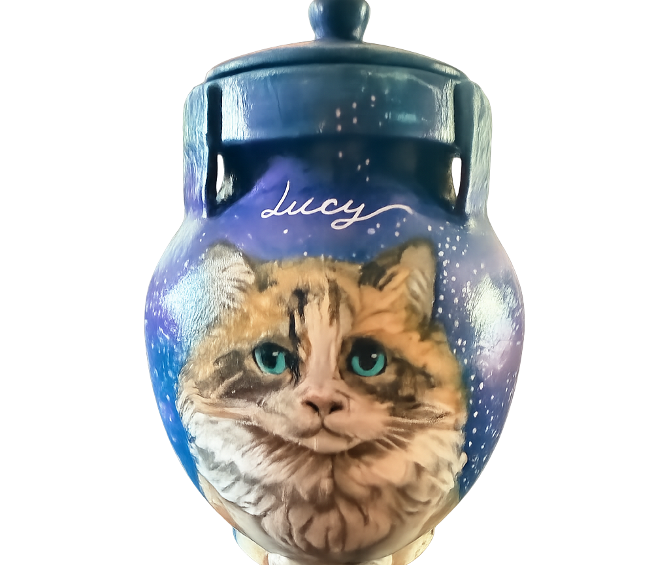
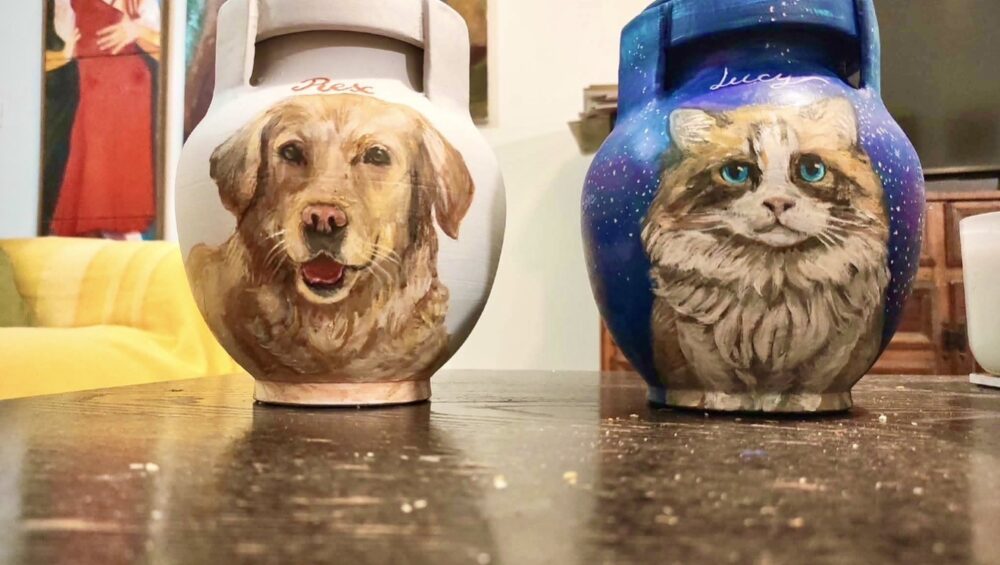
A handmade pet urn it can combine functionality, aesthetics and personal history.

The creator can use:

  • the pet's name,
  • his favorite color,
  • a special plan,
  • a footprint,
  • a dedication,
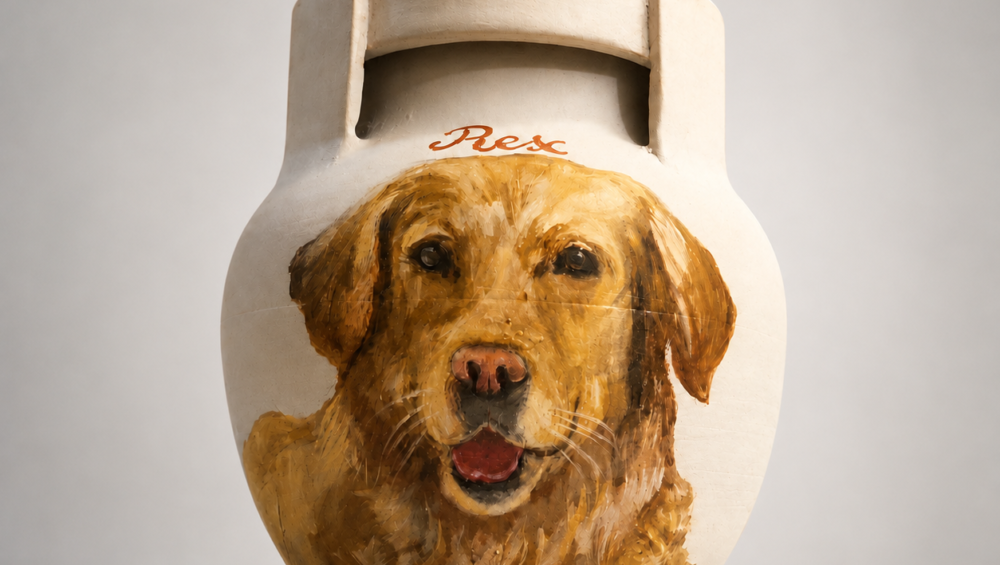
  • even his portrait.

Thus, the urn acquires character.

And, most importantly, it does not resemble a standardized mass-produced object.

Which material is best suited for a pet urn?;

Is there better material?;

No. There is a material that best suits your aesthetics and needs.

Today you can find pet urns from:

  • ceramic,
  • metal,
  • bronze,
  • wood,
  • glass,
  • stone,
  • biodegradable materials.

However, each material creates a very different effect.

Why choose a ceramic urn?;

What makes ceramic so special?;

Personally, I consider ceramic one of the warmest and most expressive materials for a keepsake object.

The artist molds the object, processes it, bakes it and can then paint it by hand.

This means that each piece can truly differ.

A handmade ceramic dog urn or a ceramic cat urn it can also acquire particular details associated with the specific animal.

For example, the creator can attribute:

  • the colors of the coat,
  • the characteristic eyes,
  • a specific expression,
  • a characteristic sign,
  • a favorite pattern.

Thus, the object acquires personality.

Is it worth choosing a personalized urn?;

What does personalization really mean?;

Personalization doesn't just mean writing a name on an urn.

It can mean much more.

For example, you can add:

  1. The pet's name.
  2. Life dates.
  3. A short personal phrase.
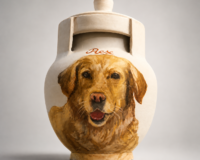
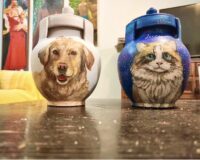
  4. Painted portrait.
  5. Colors that remind you of the animal.
  6. Footprint.
  7. A small symbol that matters to you.

However, it needs balance.

Personally, I prefer elegant personalization.

You don't have to fill an object with texts and symbols to make it personal.

Sometimes, a name and a really good portrait are enough.

How do we choose the right photo for a painted portrait?;

Does he take any photos?;

No.

If you want the artist to create a hand-painted pet urn, photography plays a crucial role.

Choose an image where:

  • the face is clearly visible,
  • there is good lighting,
  • the eyes look clear,
  • the true colors are visible,
  • there are no strong shadows.

Additionally, send two or three photos if you can.

This way, the artist better understands the details and personality of the animal.

Does the urn have to be an exact replica?;

Not necessarily.

Sometimes, a more artistic rendering best expresses the memory.

Therefore, don't just focus on photographic accuracy.

Also focus on the emotion you want the final work to convey.

How do we calculate the correct urn size?;

Does it have to do with the animal's weight?;

Yes.

The capacity of an urn must correspond to the amount of ash.

Therefore, before purchasing, inform the manufacturer of the approximate weight of the pet before cremation.

A professional can recommend the appropriate capacity for you.

At the same time, don't choose a size based solely on appearance.

First ensure that the urn meets the practical need and then consider the aesthetics.

Where can we place a pet urn?;

Do you need a special space?;

No.

And this is precisely one of the advantages of an artistic urn.

You can naturally incorporate it into your home.

For example, you can place it:

  • in a library,
  • on a beautiful shelf,
  • next to a photo,
  • on a console,
  • in a personal space,
  • in a small corner of memory.

What is a memory corner?;

You don't need to create anything complicated.

You can simply combine the urn with:

  • a favorite photo,
  • the animal's collar,
  • a small object,
  • a candle or discreet lighting.

This way, you create a space that reminds you more of the life you shared and less of the loss.

Does an urn have to look like an urn?;

Can it function as a decorative object?;

Of course.

Actually, this philosophy particularly interests me.

Why does a memorial object necessarily have to look like a traditional urn?;

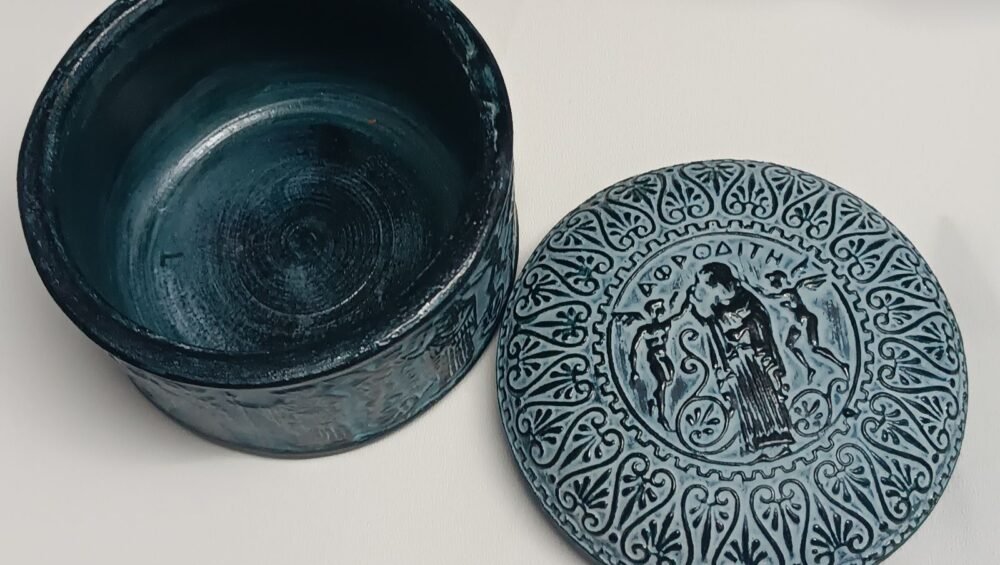
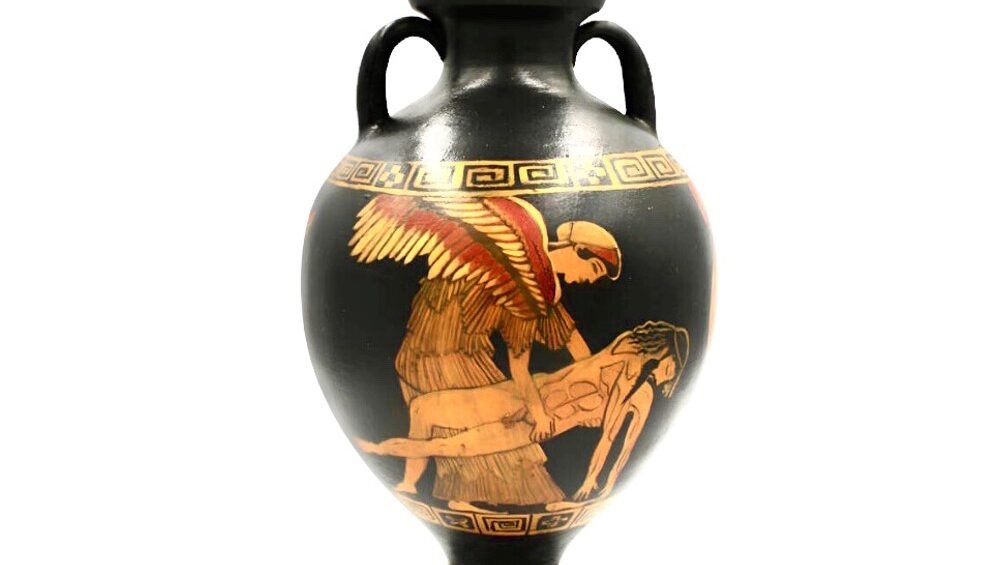
A modern designer pet urn may remind you of:

  • ceramic sculpture,
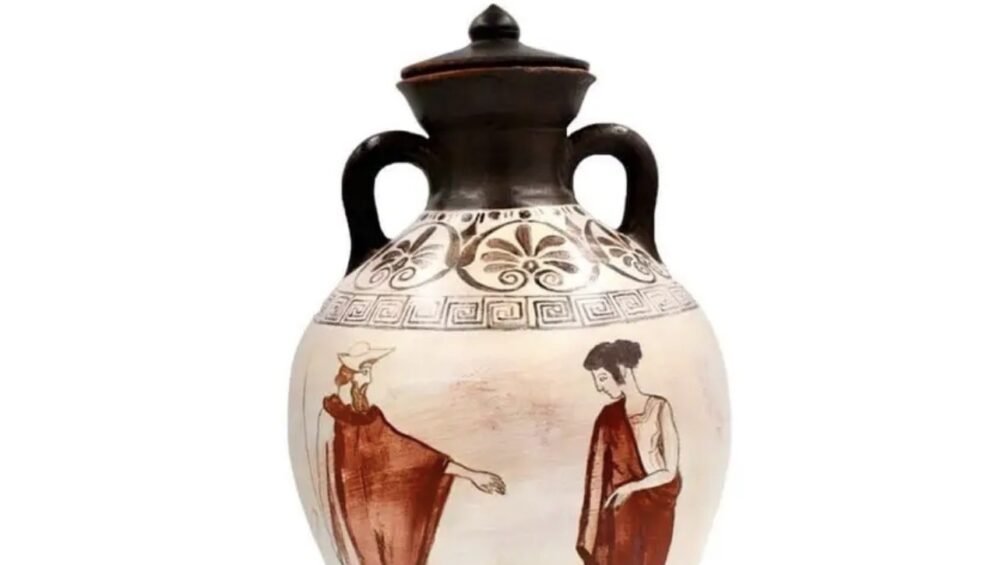
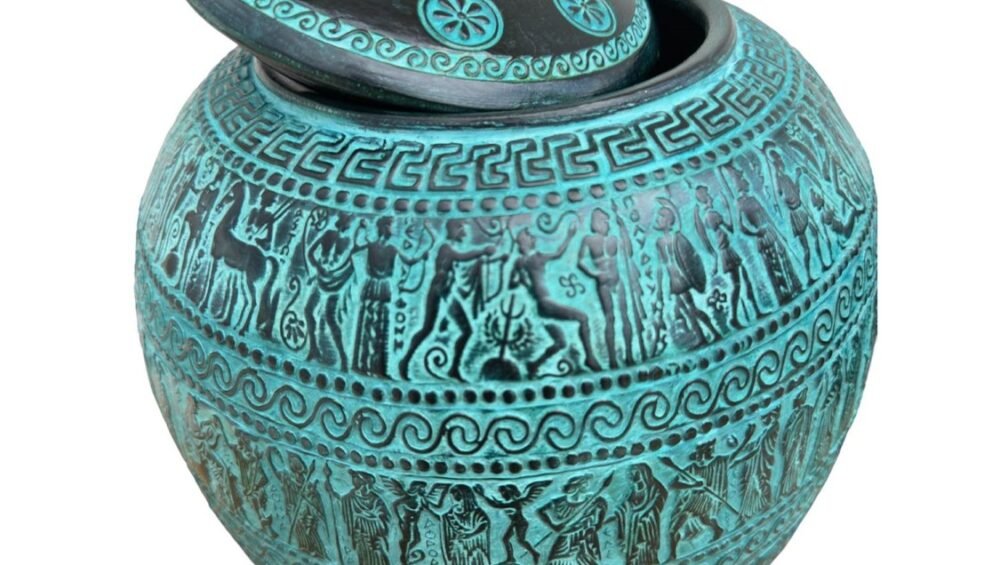
  • ancient Greek vase,
  • decorative object,
  • abstract work of art.

Thus, the person can place the urn inside the house in a natural way.

At the same time, the object retains its own private meaning.

Why does a handmade urn cost more?;

Do we only pay for the materials?;

No.

This is a very common misunderstanding.

In a handmade product, the price includes:

  • the design,
  • the work,
  • technical knowledge,
  • the materials,
  • the processing stages,
  • painting,
  • personification,
  • the time of creation.

Furthermore, the creator does not produce thousands of absolutely identical objects.

He makes small series or even unique pieces.

Therefore, when comparing prices, compare similar products.

An industrial urn and a handmade artistic object do not belong in the same category.

How do we recognize a truly quality pet urn?;

What should we check before buying?;

Before choosing, consider:

  1. The material.
  2. The method of construction.
  3. The capacity.
  4. The closing safety.
  5. The possibility of personalization.
  6. The quality of the painting or engraving.
  7. The production time.
  8. The packaging.
  9. The experience of the creator.
  10. The aesthetic consistency of the brand.

Additionally, look carefully at actual product photos.

Don't rely only on descriptions.

Should we choose an urn immediately after the loss?;

Do we need to rush?;

No.

The choice of a pet memorial urn it is a personal decision.

You don't need to take it within the first few hours or days.

If you're not ready, give yourself time.

Look at different designs. Think about where you want to place the urn. Choose the photos you love the most.

Then, decide.

Rushing rarely helps when choosing something so personal.

Why was the TopUrns.com philosophy created?;

For me, the urn should not be an object that someone wants to hide.

It can become a beautiful object that tells a story.

This is precisely the philosophy expressed by TopUrns.com.

Art, handmade creation, and the ability to personalize can transform a pet urn into a special keepsake.

Why each pet was different.

He had a different character, different habits, and a different relationship with his human.

So why should his urn be the same as thousands of others?;

Conclusion: Choose something that speaks about life and not just loss

Choosing the appropriate pet urn it's not just about size, material or price.

It mainly concerns memory.

Do you want something simple? Choose it.

Do you want a portrait? Create it.

Do you want a special ceramic object that only you know what it symbolizes? Even better.

There is no one right way to remember a beloved animal.

There is only his.

So, before you choose, ask yourself:

«"When I look at this object, does it really remind me of my own friend?"»

If the answer is yes, you have probably found the right choice.

In TopUrns.com We believe that a bond this personal deserves an equally personal keepsake.

Because their lives were unique. And their memory deserves to remain that way.
pet urnsCategoriesURNS

The 10 Most Common Diseases in Dogs: Symptoms, Prevention and When to See a Vet


The 10 Most Common Diseases in Dogs: Symptoms, Prevention and When to See a Vet

Dogs communicate with us every day, even if they can't verbally tell us they're in pain or not feeling well. That's why every dog owner needs to know the signs. most common diseases in dogs and recognize the early warning signs.

Is your dog drinking more water? Is he constantly scratching, losing weight, or having trouble getting up? These changes may seem small. However, they often indicate that his body is experiencing a problem.

In this article we will look at the most common diseases in dogs, the main symptoms, risk factors and ways in which you can protect the health of your four-legged companion.

What are the most common diseases in dogs?;

Age, breed, weight, diet, exercise, and genetic predisposition affect each dog's health.

The most common diseases include:   topurns.com

  1. Dental diseases
  2. Otitis
  3. Skin allergies
  4. Parasites
  5. Obesity
  6. Osteoarthritis
  7. Diabetes mellitus
  8. Kidney disease
  9. Infectious diseases
  10. Cancer

Let's look at each problem separately.

1. Dental diseases in dogs

How do we know that a dog has a dental problem?;

Dental plaque accumulates on teeth every day. If the caregiver does not take care of oral hygiene, the plaque can turn into tartar and irritate the gums.

Gingivitis can then develop into periodontal disease.

The dog may exhibit:

  • bad breath
  • red gums
  • bleeding
  • tartar on teeth
  • difficulty chewing
  • decreased appetite
  • loose teeth

Why should we take care of our dog's teeth?;

Dental disease causes pain and can significantly affect one's daily life.

The owner can reduce the risk with regular brushing and proper care. At the same time, the veterinarian checks the teeth and recommends cleaning when necessary.

2. Otitis in dogs

Why does the dog constantly shake its head?;

The dog often shakes its head or scratches its ears when it feels pain or intense itching.

Η otitis in dogs is a common problem, especially in animals with floppy ears or allergies.

What symptoms does he exhibit?;

The dog can:

  • persistently scratches ears
  • constantly shaking his head
  • keeps head tilted
  • reacts when you touch the ear
  • shows redness
  • has secretions
  • has a strong odor from the ear

In addition, allergies often cause recurring ear infections.

For this reason, the veterinarian doesn't just treat the infection. He also looks for the cause when the problem recurs.

3. Skin allergies in dogs

Why is the dog constantly scratching?;

All dogs scratch occasionally. However, when a dog scratches persistently, constantly licks their paws, or injures their skin, it needs to be checked out.

The allergies to dogs may be related to:

  • fleas
  • pollen
  • powder
  • mites
  • environmental factors
  • specific foods

What symptoms do allergies cause?;

The dog may exhibit:

  • intense itching
  • redness
  • licking feet
  • hair loss
  • skin wounds
  • recurring ear infections
  • secondary skin infections

The guardian should not constantly change foods or use medications without guidance.

Instead, the veterinarian investigates the cause and suggests the appropriate treatment plan.

4. Parasites in dogs

Which parasites most commonly infect a dog?;

Parasites can live on the skin or inside the body.

External parasites include:

  • fleas
  • ticks
  • mites

Internal parasites include:

  • roundworms
  • movies
  • hookworm
  • other intestinal parasites

How do we know that the dog has parasites?;

The dog may present with:

  • intense scratching
  • irritation
  • hair loss
  • vomiting
  • diarrhea
  • weight loss
  • decreased energy
  • swollen belly

However, some dogs do not show severe symptoms.

For this reason, the veterinarian determines the appropriate antiparasitic protection program according to the dog's age, lifestyle and environment.

5. Obesity in dogs

Is obesity just a matter of appearance?;

No. The obesity in dogs affects his health and quality of life.

Extra weight puts pressure on joints, makes movement difficult and increases the risk of various health problems.

How do we know if a dog is overweight?;

Notice if:

  • you have difficulty feeling your ribs
  • the body does not form a visible waist
  • the dog gets tired easily
  • avoids the game
  • has difficulty with stairs
  • panting more

What can we do?;

The guardian can:

  1. measures the daily amount of food,
  2. limits treats,
  3. offers daily exercise,
  4. systematically controls weight,
  5. asks the veterinarian for a Body Condition Score assessment.

This way, the dog can maintain a healthier weight and better mobility.

6. Osteoarthritis in dogs

My dog is having trouble getting up. Is it just age?;

Not always.

Η osteoarthritis in dogs It causes chronic pain and limits movement. The condition occurs most often in older dogs, but can also affect younger animals.

What signs should we look out for?;

The dog can:

  • gets up with difficulty
  • walks more slowly
  • limps
  • avoids stairs
  • refuses to jump
  • gets tired faster
  • reduces the duration of the walk
  • reacts when we touch a painful area

Many dogs don't cry when they're in pain. Instead, they reduce their activity.

For this reason, the guardian must observe these small changes.

7. Diabetes mellitus in dogs

Can a dog develop diabetes?;

Yes. The diabetes mellitus in dogs It affects how the body handles glucose.

What symptoms does the dog show?;

The dog often:

  • drinks more water
  • urinates more often
  • eats more
  • is losing weight
  • gets tired easily
  • shows weakness

In some dogs, diabetes can also affect vision.

A typical combination of symptoms is increased appetite along with weight loss.

If you notice these signs, your veterinarian may check blood and urine glucose.

8. Kidney disease in dogs

What symptoms does kidney disease cause?;

Η chronic kidney disease in dogs it may progress slowly.

At first, the guardian may only notice that the dog drinks more water.

Then, it may display:

  • increased thirst
  • frequent urination
  • decreased appetite
  • weight loss
  • vomiting
  • lethargy
  • dehydration

Why is preventive screening important?;

The vet can check kidney function with blood and urine tests.

This way, he can identify a problem before the dog shows severe symptoms.

Especially in older dogs, preventive examinations offer important information about their general health status.

9. Infectious diseases in dogs

Which infectious diseases require special attention?;

Parvovirus and distemper are serious infections, especially for puppies.

What symptoms does parvo cause?;

The dog may exhibit:

  • severe vomiting
  • severe diarrhea
  • loss of appetite
  • dehydration
  • fever
  • severe weakness

Carré disease can affect the respiratory, digestive, and nervous systems.

How do we protect the dog?;

The veterinarian organizes the appropriate vaccination program.

Especially in puppies, proper vaccination plays a crucial role in protecting against serious infections.

10. Cancer in dogs

What symptoms should worry us?;

Cancer in dogs can present in many different ways.

Therefore, there is no specific symptom that confirms cancer.

However, the guardian should seek veterinary advice when they observe:

  • new lump
  • growing lump
  • unexplained weight loss
  • persistent loss of appetite
  • unusual bleeding
  • a wound that does not heal
  • persistent lameness
  • big change in behavior

Does every lump mean cancer?;

No.

Many lumps are benign, but only a veterinarian can properly evaluate a new lump and recommend the appropriate tests.

What signs indicate that a dog may be sick?;

What should we observe daily?;

The guardian knows better than anyone the normal behavior of their dog.

For this, it is worth watching:

  • the appetite
  • the amount of water
  • body weight
  • urination
  • the feces
  • breathing
  • sleep
  • the mood
  • walking
  • the game
  • the fur
  • the skin

If the dog suddenly changes behavior, becomes isolated or refuses activities it used to enjoy, the guardian should pay attention to the change.

When should we take the dog to the vet immediately?;

What symptoms constitute an emergency?;

Contact a veterinarian immediately when the dog:

  1. has difficulty breathing,
  2. collapses,
  3. has convulsions,
  4. is bleeding heavily,
  5. causes repeated vomiting,
  6. has severe or bloody diarrhea,
  7. cannot urinate,
  8. has suffered a serious injury,
  9. has swallowed a potentially toxic substance,
  10. experiences sudden weakness or paralysis,
  11. presents with severe and sudden abdominal swelling.

In these cases, the caregiver should not wait to see if the symptom will subside.

How can we prevent the most common diseases in dogs?;

What can a guardian do every day?;

Proper prevention reduces several risks and helps the veterinarian detect problems earlier.

For better health:

  1. Schedule regular veterinary checkups.
  2. Follow the appropriate vaccination schedule.
  3. Protect the dog from parasites.
  4. Offer a balanced diet.
  5. Maintain a normal body weight.
  6. Encourage daily exercise.
  7. Take care of his teeth.
  8. Check the ears and skin.
  9. Monitor changes in appetite and thirst.
  10. Increase preventive checkups as the dog gets older.

What diseases occur most frequently in older dogs?;

Why do senior dogs need more monitoring?;

Age increases the risk of several chronic health problems.

Older dogs more often experience:

  • osteoarthritis
  • kidney disease
  • cardiac problems
  • dental diseases
  • diabetes
  • neoplasms
  • vision problems
  • hearing problems

For this reason, the veterinarian may recommend more frequent preventive checkups.

Conclusion: Observe your dog and act promptly

The most common diseases in dogs They don't always cause dramatic symptoms. Often, the dog first changes small daily habits.

Is he drinking more water? Is he eating less? Is he losing weight? Is he avoiding walks? Is he scratching himself constantly? Is he having trouble getting up?;

The guardian who is aware of the dog's normal behavior can detect these changes early.

At the same time, a balanced diet, daily exercise, proper weight, vaccinations, anti-parasitic protection, and regular veterinary checkups support the dog's long-term health.

If you notice a persistent or sudden change in your dog's behavior or health, contact your veterinarian.

The earlier we recognize a problem, the more options the veterinarian may have to protect the health and well-being of the animal. quality of life of the animal.

The article offers general information and does not replace a veterinarian's examination, diagnosis, or instructions.

topurns.comCategoriesURNS

The 10 Most Common Diseases in Cats: Symptoms & Prevention

The Most Common Diseases in Cats: 10 Health Problems and Symptoms You Shouldn't Ignore

Cats have a special way of hiding their weakness and pain. Therefore, a cat can be facing a health problem without showing any strong symptoms at first. For this reason, every owner needs to know what the signs are. most common diseases in cats and, most importantly, what early signs to look out for.

Is your cat suddenly drinking more water? Is she losing weight while eating normally? Is she going to the litter box more often? Has she stopped jumping on her favorite couch?;

These changes may seem small. However, they are sometimes the first symptoms of illness in cats.

Next, we will look at 10 common health problems in cats, their symptoms, when a veterinary check-up is needed, and what we can do for prevention.

1. How common is dental disease in cats?;

Very common. Dental and gum disease is one of the most common health problems in adult cats.

According to the Cornell Feline Health Center, studies show that approximately 50% to 90% of cats over four years old They have some form of dental disease. Gingivitis, periodontitis, and tooth resorption are among the most common conditions.

What symptoms indicate a dental problem?;

Pay attention if the cat:

  • has severe bad breath,
  • has difficulty chewing,
  • lets food fall out of the mouth,
  • has red or swollen gums,
  • shows increased salivation,
  • eats less than before.

In fact, a cat may continue to eat even when in pain, which is why regular oral checkups by a veterinarian are especially important.

2. What is chronic kidney disease in cats?;

Η chronic kidney disease in cats It causes a gradual and permanent decline in kidney function. It occurs mainly in older ages and is one of the most important health problems in senior cats.

Cornell reports that chronic kidney disease can affect up to 40% of cats over 10 years of age and up to 80% of cats over 15 years of age. Additionally, in the early stages, the cat may not show any obvious symptoms.

What are the symptoms of kidney disease?;

The owner may notice:

  • more thirst,
  • increased urination,
  • gradual weight loss,
  • decreased appetite,
  • vomiting,
  • dehydration,
  • lethargy,
  • change in coat quality.

Why is early diagnosis necessary?; Because the veterinarian can assess kidney function with blood and urine tests and plan appropriate management as early as possible.

3. Why do urinary problems in cats need attention?;

The Urological problems in cats include various diseases of the bladder and urethra. The term FLUTD – Feline Lower Urinary Tract Disease describes a set of disorders of the lower urinary tract.

How do we know that the cat has a urinary problem?;

Notice if:

  • repeatedly visits the sand,
  • straining to urinate,
  • produces little urine,
  • urinates outside the sand,
  • has blood in the urine,
  • cries out when trying to urinate,
  • persistently licks the genital area.

When does it become an emergency?;

When a cat, especially a male cat, tries to urinate but does not produce urine, immediate veterinary assistance is needed.

Complete urethral obstruction is a true emergency and can be life-threatening.

Therefore, we are not waiting to "see if it will pass.".

4. What is hyperthyroidism in cats?;

Ο hyperthyroidism in cats occurs when the thyroid gland produces too much thyroid hormone. The condition is most common in middle-aged and older cats.

What is the most characteristic symptom?;

A cat can eating more but losing weight at the same time.

Additionally, it may display:

  • increased appetite,
  • increased thirst,
  • more frequent urination,
  • hyperactivity,
  • intense meowing,
  • vomiting or diarrhea,
  • tachycardia,
  • unkempt hair.

Hyperthyroidism occurs primarily in cats over seven years of age, and diagnosis usually involves measuring the thyroid hormone T4.

5. Can cats get diabetes?;

Yes. Diabetes mellitus is a major endocrine disease in cats.

The body does not use insulin effectively and, as a result, blood glucose levels increase.

What are the symptoms of diabetes in cats?;

The most common signs include:

  • excessive thirst,
  • increased urination,
  • increased appetite,
  • weight loss,
  • weakness,
  • reduced activity.

Obesity is also a major risk factor. According to Cornell, obese cats may have up to four times the risk of developing diabetes compared to cats of normal weight.

6. Is obesity a disease for a cat?;

Η obesity in cats It is not just a cosmetic problem. On the contrary, it significantly affects overall health and increases the risk of other diseases.

What problems can increased weight cause?;

Obesity is associated with:

  • increased risk of diabetes,
  • reduced mobility,
  • greater burden on the joints,
  • difficulty in self-care,
  • reduced physical activity.

Therefore, the veterinarian can evaluate the Body Condition Score and determine the ideal weight.

However, we should not abruptly reduce the food of an overweight cat without veterinary guidance.

topurns.com
urns for pets

7. How common are respiratory infections in cats?;

The respiratory infections in cats They occur frequently, especially in young cats and in environments where many animals live together, such as shelters and kennels.

How do we understand a respiratory infection?;

We often see:

  • sneezing,
  • nasal discharge,
  • tears or discharge from the eyes,
  • conjunctivitis,
  • cough,
  • fever,
  • decreased appetite,
  • lethargy,
  • in some cases, mouth ulcers.

Feline herpesvirus and calicivirus are known agents of respiratory disease.

Furthermore, proper vaccination reduces the risk of serious illness, although it does not eliminate all possibility of infection.

8. Which parasites most commonly infect cats?;

Cats can be infected with various intestinal parasites, such as roundworms, tapeworms and hookworms, but also from protozoa such as Giardia.

What symptoms do parasites cause?;

The cat may present with:

  • diarrhea,
  • vomiting,
  • weight loss,
  • decreased appetite,
  • swollen belly,
  • dull coat.

In some cat populations, gastrointestinal parasitism has been reported at rates up to 45%. At the same time, some parasites can also be transmitted to humans.

Therefore, we implement a deworming program according to the veterinarian's personalized instructions.

9. Do older cats get arthritis?;

Yes, and quite often. However, owners don't always easily recognize the symptoms.

How do we know that a cat has joint pain?;

It can:

  • stop jumping high,
  • avoids stairs,
  • moves less,
  • sleeps more,
  • has difficulty entering the sand,
  • takes less care of her hair,
  • reacts when we touch specific points.

The important thing is that A cat with arthritis does not necessarily limp.. Often it's just a matter of changing her daily routine. Cornell points out that degenerative joint disease is common in older cats.

10. Can cats get cancer?;

Yes. As with other animals, cats can develop different forms of cancer, and the risk of certain cancers increases with age.

What signs need investigation?;

Contact a veterinarian if you notice:

  • unexplained weight loss,
  • persistent loss of appetite,
  • lumps or swellings,
  • wounds that don't heal,
  • unusual bleeding,
  • persistent vomiting or diarrhea,
  • significant change in behavior.

Of course, none of these symptoms does not mean in itself that the cat has cancer. However, veterinary evaluation is needed when a symptom persists.

How do we generally understand that a cat is sick?;

This is perhaps the most important question for every owner.

We observe our cat every day, so we can spot small changes before they become big ones.

What signs of illness in cats should we watch for?;

Pay attention to changes:

  • in appetite,
  • in water consumption,
  • in weight,
  • in urination,
  • in bowel movements,
  • in sleep,
  • in the game,
  • in care,
  • in the meowing,
  • in social behavior,
  • in breathing.

For example, a cat that suddenly hides more, no longer climbs on the couch, or avoids contact may be showing us that it is not feeling well.

When should we take the cat to the vet immediately?;

Not every symptom should cause panic. However, some situations require emergency veterinary care.

Seek immediate help when the cat:

  1. tries to urinate but can't,
  2. has difficulty breathing,
  3. collapses or shows severe weakness,
  4. has convulsions,
  5. has severe bleeding,
  6. has continuous or severe vomiting,
  7. has suffered a serious injury,
  8. has possibly consumed a toxic substance,
  9. experiences sudden paralysis or weakness in the extremities.

In particular, the inability to urinate is an absolute emergency.

How can we protect our cat's health?;

Prevention cannot prevent every disease. However, it can significantly help in early diagnosis and maintaining a better quality of life.

What can we do every day?;

  • We schedule regular veterinary checkups.
  • We follow the appropriate vaccination schedule.
  • We apply proper anti-parasitic protection.
  • We keep the cat at a healthy weight.
  • We offer a balanced diet.
  • We ensure clean and fresh water every day.
  • We encourage play and movement.
  • We monitor dental health.
  • We check the sand habits daily.
  • We observe any change in behavior.

As your cat ages, preventive checkups become even more important. Chronic kidney disease, hyperthyroidism, arthritis, diabetes, and other conditions are more common in older cats.

Conclusion: Our cat can't tell us it's hurting — but it can show us

The knowledge surrounding the most common diseases in cats helps the owner to identify important changes in a timely manner.

We don't need to be veterinarians to protect our cat. However, we do need to know its normal weight, appetite, the amount of water it drinks, its litter habits, and its usual behavior.

Ultimately, the most important question is simple: «Is my cat behaving as usual?»

If the answer is no and the change persists, contact your veterinarian. Early recognition of a problem can make a significant difference in both treatment and the cat's quality of life.

The article provides general information about cat health and does not replace a veterinarian's examination, diagnosis, or treatment instructions.

www.topurns.com

www.topurns.comCategoriesASHTANKS URNS

Pet Urns as Works of Art: A Guide to Remembrance and Personalization

Pet Urns as Works of Art: A Guide to Remembrance and Personalization

The loss of a beloved pet leaves a big void. A dog or cat doesn't just share our home. They share our daily lives, our habits, our joys, and many important moments in our lives.

That's why, when the time comes to say goodbye, many guardians look for a beautiful and personal way to keep their pet's memory close to them.

The pet urns as works of art They give a different dimension to memory. They don't just offer a place to store ashes. They combine art, handmade creation, aesthetics and personal elements that tell a unique story.

But how do you choose the right pet urn? Which material best suits your space and aesthetic? Can an artist paint a portrait of your dog or cat?;

Let's look at all the options.

Why choose an artistic pet urn?;

How is it different from a simple urn?;

A simple urn mainly meets a practical need. In contrast, a artistic pet urn combines functionality with aesthetics and emotion.

The creator works with colors, shapes, textures and details that refer to the beloved animal. At the same time, he can add his name, dates, a symbol or a personal dedication.

So, you're not just choosing a keepsake. You're choosing an item that expresses the relationship you had with your pet.

A handmade urn can, therefore, function as a small work of art in the home.

Why is personalization so important?;

Each pet had its own personality.

A dog loved nature walks. A cat spent hours at its favorite window. Another animal had a distinctive look, particular colors in its fur, or a posture that everyone in the house recognized immediately.

A personalized pet urn can keep these details alive.

The artist may create a portrait, use specific colors, or add a symbol associated with the animal.

Thus, personalization transforms an urn into a unique memorial object.

What materials do creators choose for pet urns?;

Today you will find many different options. Each material offers a different texture, aesthetic and character.

The most well-known options include:

  • ceramic
  • glass
  • metal
  • bronze
  • natural stone
  • wood
  • biodegradable materials

However, the material doesn't just determine the appearance. It also determines how the urn fits into your space.

Ceramic pet urns

Why choose ceramic?;

Ceramic offers warmth, natural texture and great creative freedom.

The artist shapes the object, adds relief elements, carves details and paints each surface separately.

That's why the handmade ceramic pet urns They are particularly suitable for people looking for something personal and artistic.

Furthermore, ceramics gives the creator the opportunity to work with different shapes, colors and techniques.

Thus, each piece acquires its own identity.

Can an artist paint your pet?;

Yes. Hand painting offers one of the most personal ways to personalize.

You can send a favorite photo of your pet and the creator can use its features as the basis for the design.

For example, it can yield:

  • the face of the animal
  • the color of the coat
  • the eyes
  • special signs
  • the name
  • important dates
  • a little personal dedication

In this way, a personalized dog urn or a handmade cat urn acquires a distinct character.

You are not buying a standardized product. You are choosing an object that the creator designs based on your own story.

Sculptural urns for dogs and cats

Can an urn resemble the animal itself?;

Yes. Some artists work with sculptural forms and create designs that refer to the figure of a dog or a cat.

A cat, for example, might appear curled up in a sleeping position. Similarly, a creator might render a dog sitting or lying down.

Thus, the pet urn It functions simultaneously as an urn and as a small sculpture.

At the same time, the sculptural design helps the urn to integrate more naturally into the home's decor.

Glass pet urns

What makes glass so special?;

Glass interacts with light and creates striking visual effects.

Artists work with the material and create:

  • bullets
  • hearts
  • abstract sculptures
  • organic shapes
  • colorful compositions

Furthermore, handmade glass creates slight variations from object to object. These differences give uniqueness to each creation.

A glass pet memorial urn It may therefore resemble more of an artistic decoration and less of a traditional urn.

Metal and bronze urns

When is it worth choosing metal?;

Metal offers durability and a strong sense of permanence.

Bronze, in particular, creates a particularly sculptural and timeless effect.

At the same time, craftsmen can engrave on the metal:

  • the pet's name
  • important dates
  • small symbols
  • footprints
  • personal phrases

Therefore, a metal or bronze urn suits people who prefer a more classic or monumental style.

Are there eco-friendly pet urns?;

Yes. Many guardians are now looking for biodegradable pet urns.

Manufacturers are using materials that allow for a different approach to memory.

Some designs link the urn to the planting of a plant or tree, giving the guardian a symbolic way to connect the pet's memory with nature.

Before choosing such a solution, check:

  • the materials
  • the instructions for use
  • the method of placement
  • the environmental conditions
  • the manufacturer's recommendations

This way you will choose the solution that suits your needs.

How do you create a personalized pet urn?;

Proper preparation helps the creator understand exactly what you want.

Step 1: Choose the right photo

Start with a clear photo of your pet.

Which photo works best?;

Choose an image that clearly shows:

  • the face
  • the look
  • the colors of the coat
  • special features

You can also send two or three different photos. This will give the creator a better idea of the animal's characteristics.

Step 2: Choose the style of the urn

Do you want a realistic portrait or do you prefer a more abstract artistic approach?;

Think about:

  • the color
  • the shape
  • the material
  • the style
  • the size
  • the place where you will place the urn

Then, provide this information to the creator, giving them a clear aesthetic brief.

Step 3: Add personal details

You can add:

  • name
  • dates
  • small dedication
  • symbol
  • footprint
  • favorite colors

However, keep the plan balanced.

A few well-chosen details often create a more elegant and timeless result.

How do you choose the right size urn?;

Does the pet's weight matter?;

Yes. The amount of ash determines the capacity you need.

Therefore, before purchasing an urn, inform the manufacturer or seller about the approximate weight of the pet.

So, the professional will help you choose the appropriate size.

At the same time, think about where you want to place the urn. A large sculptural object needs more space, while a smaller ceramic design fits easily on a bookcase, shelf, or nightstand.

Where can you place an artistic urn?;

You don't need to create a separate or heavy memory space.

A pet urn as a work of art it can become part of everyday home decor.

Create a discreet memory corner

Place the urn together with:

  • a favorite photo
  • the pet's collar
  • a small personal item
  • a discreet lamp

Thus, you create a peaceful space that keeps beautiful memories close to you.

Integrate the urn into the decoration

A handmade ceramic or sculptural urn can stand alone on a shelf, console, or bookcase.

This way, you keep the memory of your pet close to you without changing the character of the home.

How much does a handmade pet urn cost?;

Why does it cost more than a mass-produced product?;

The creator dedicates time, technical and artistic work to each piece.

The final price usually depends on:

  • the handmade design
  • the materials
  • the painting
  • the sculptural work
  • the personification
  • the production time
  • the size
  • the complexity
  • the uniqueness of the project

Therefore, a handmade urn is not directly comparable to a simple industrial product.

The client chooses an object that the artist creates especially for them. the memory of a specific animal.

How do you choose the best urn for your pet?;

Before you decide, answer seven simple questions:

  1. Do I want a subtle or bolder design?;
  2. Do I prefer ceramic, glass, wood or metal?;
  3. Do I want the pet's portrait?;
  4. Do I want to add a name or dedication?;
  5. Where should I place the urn?;
  6. What size do I need?;
  7. Do I want a unique handmade piece?;

The answers will help you narrow down the choices and find an urn that truly fits your story.

TopUrns.com: When memory meets art

In TopUrns.com, we see the pet urn differently.

We combine handmade creation, ceramic art and personalization to offer commemorative items with a special character.

So, you're not just choosing a place to store the ashes.

You choose a work that suits your aesthetic and honors the uniqueness of the animal that shared life with you.

Because every dog and every cat writes its own story.

And every unique story deserves an equally unique way of remembering.

Conclusion: A work of art for a unique relationship

Choosing a pet urn expresses something deeply personal.

You might choose a simple ceramic design. You might prefer a hand-painted portrait. Maybe you'll love a sculptural figure that resembles your dog or cat.

Whatever design you choose, the goal remains the same: to honor a relationship that left its mark on your life.

The pet urns as works of art they combine aesthetics, handmade creation and personalization.

Because ultimately we are not just holding an object.

We hold a history. A presence. A memory.

Discover handmade and personalized pet urns at TopUrns.com and choose a unique way to honor a bond that will always remain a part of your life.

topurns.comCategoriesASHTANKS URNS

Pet Urns: Why Choosing the Right One Matters for Honoring Your Beloved Companion


Pet Urns: Why Choosing the Right One Matters for Honoring Your Beloved Companion

Introduction

Losing a pet is one of the hardest experiences a pet owner can face. So how do you honor that bond after they're gone? For many families, pet urns provide the answer. A pet urn is far more than a simple container — it becomes a lasting symbol of love, memory, and companionship. Because this decision carries so much emotional weight, understanding your options matters just as much as making the choice itself. In this article, we'll walk through the different types of pet urns, explain how to choose the right size and material, explore personalization options, and discuss why this decision deserves your full attention. By the end, you'll feel confident selecting a memorial that truly honors your furry friend.

What Is a Pet Urn and Why Does It Matter?

What exactly is a pet urn? Simply put, it's a vessel designed to hold your pet's cremated remains. However, its purpose extends well beyond function. A pet urn also serves as a physical memorial, giving grieving owners a tangible way to keep their pet close.

Why does this matter so much? Because grief needs an outlet, and a well-chosen urn provides one. Consequently, many pet owners find comfort simply by having a dedicated space to remember their companion.

Here's what a quality pet cremation urn typically offers:

  • A permanent, respectful resting place for ashes

  • A visual reminder of the bond you shared

  • A comforting presence during the grieving process

  • A keepsake that can be displayed at home or in a memorial garden

Ultimately, a memorial urn for pets transforms loss into something you can hold onto — literally and emotionally.

Types of Pet Urns to Consider

With so many types of pet urns available, how do you know where to start? The good news is that most options fall into a few clear categories, making the decision easier than it first appears.

Traditional Material-Based Urns

  1. Wooden urns – Warm, natural, and easy to personalize with engraving

  2. Ceramic or porcelain urns – Elegant and decorative, although more fragile

  3. Metal or brass urns – Durable and built to last for generations

Eco-Friendly and Alternative Options

  1. Biodegradable pet urns – Ideal for burial or scattering ceremonies

  2. Photo urns – Feature an engraved photo or built-in frame

  3. Jewelry urns – Keepsake pieces that hold a small portion of ashes

  4. Scatter tubes – Designed specifically for scattering ceremonies

Because every pet owner grieves differently, having this variety ensures there's a meaningful option for everyone. Whether you prefer a traditional display piece or an eco-conscious biodegradable urn, the right choice ultimately reflects your pet's personality and your own healing process.

Choosing the Right Size and Material

Once you've narrowed down the type, how do you choose the correct size? This step is critical, since an improperly sized urn can feel like an afterthought rather than a fitting tribute.

As a general guideline, most urns require one cubic inch of capacity per pound of your pet's body weight. Therefore, a 40-pound dog typically needs an urn with at least 40 cubic inches of space.

Material Considerations

Different materials offer different benefits, so weighing your priorities helps narrow the field:

  • Wood – Offers a warm, customizable aesthetic and ages beautifully over time

  • Ceramic – Provides an elegant look but requires careful handling

  • Metal – Delivers exceptional durability and long-term resistance to damage

  • Biodegradable materials – Support eco-friendly burial or scattering practices

Because size and material directly affect both appearance and function, taking time to evaluate these factors ensures your pet urn cost and quality align with your expectations.

Personalization and Customization Options

Should a pet urn be personalized? In most cases, yes — personalization transforms a simple container into a one-of-a-kind tribute. After all, no two pets are alike, so why should their memorial be generic?

Popular personalized pet urns options include:

  • Engraved names, birthdates, and passing dates

  • Custom paw print impressions

  • Photo frames or laser-etched images

  • Choice of colors, finishes, and decorative shapes

  • Small compartments for fur clippings, collar tags, or tiny mementos

Additionally, many companies now offer fully custom engraved pet urn designs, allowing you to include a favorite phrase, nickname, or symbol that captures your pet's spirit. As a result, personalization not only enhances the urn's meaning but also creates a keepsake you'll treasure for years.

Why Choosing the Right Pet Urn Is So Important

Is this decision really as important as it feels? Absolutely — and here's why. The importance of pet urns goes far beyond aesthetics? it directly impacts how you process grief and remember your companion.

Consider these key reasons this choice matters:

  • It supports emotional healing. A meaningful urn gives grief a focal point, helping you process loss in a healthy way.

  • It creates a lasting tribute. Unlike temporary memorials, a quality urn endures for decades.

  • It becomes a family keepsake. Many families pass cherished pet memorials down through generations.

  • It prevents future regret. Rushed or impersonal choices often leave owners wishing they'd chosen more thoughtfully.

Since this decision is permanent, taking the time to choose a pet memorial tribute that truly resonates with your relationship makes all the difference. Rather than viewing it as just another purchase, think of it as one final act of love for your companion.

Where to Place or Display Your Pet's Urn

After choosing an urn, where should it go? This depends largely on personal preference, although several popular options exist.

Indoor Display Ideas

  • A dedicated memorial shelf alongside photos and mementos

  • A bedside table or living room display

  • A curated memory box featuring the urn and other keepsakes

Outdoor Memorial Options

  • A weatherproof urn placed in a garden memorial

  • A planted tree or flower bed marking the location

  • A combined burial and scattering approach using biodegradable options

Because displaying pet urns at home creates an ongoing connection to your pet, many owners find comfort in walking past a familiar, meaningful space each day. Meanwhile, outdoor memorials offer a peaceful, natural setting for reflection.

Budget Considerations for Pet Urns

How much should you expect to spend? Pricing varies significantly based on material, size, and customization level, so understanding the range helps set realistic expectations.

Generally speaking:

  • Basic urns (simple wood or metal) range from $30–$75

  • Mid-range urns with personalization typically cost $75–$150

  • Premium or custom-designed urns can exceed $200, depending on craftsmanship

While affordable pet urns are widely available, it's worth remembering that sentimental value often outweighs price. Consequently, many owners choose to invest a bit more in a design that truly reflects their pet's memory rather than opting for the cheapest available option.

Tips for Choosing the Perfect Pet Urn

Feeling ready to decide? Before finalizing your choice, keep these essential tips in mind:

  1. Reflect on your pet's personality and choose a style that feels authentic

  2. Measure the required size based on your pet's weight

  3. Decide between display, burial, or scattering to guide material choice

  4. Set a realistic budget without sacrificing meaningful personalization

  5. Choose engraving or photo options that celebrate your pet's unique story

  6. Read reviews and verify craftsmanship before completing your purchase

By following this pet urn buying guide, you'll avoid common pitfalls and instead choose a memorial that brings genuine comfort during a difficult time.

pet urnsConclusion

Choosing the right pet urn is never just a practical task — it's a meaningful, personal decision that honors the bond you share with your companion. Throughout this guide, we've covered the various types of urns, how to select the correct size and material, personalization options, and where to display your pet's memorial. We've also explored budget considerations and practical tips to guide your final decision.

Ultimately, the right urn helps transform grief into a lasting, comforting tribute. So, as you begin this process, take your time and choose an option that truly reflects your pet's spirit and your relationship together. If you're ready to find a meaningful memorial, consider browsing personalized pet urns designed to celebrate your beloved companion's memory for years to come.

τεφροδόχος για φύλαξη τέφραςCategoriesASHTANKS URNS

Ash: it's not ashes — it's memory, value and culture

Ash is not ashes — it is memory, value and culture

In a Europe of common policies, many are looking for a single rule for the storage of ashes. But reality says something different:
Europe does not impose a law — it allows each state to define its own approach to managing ash after incineration.

The European Union has not established a common framework for the issue. Member states regulate incineration and ash management on their own. And this is where the big differences begin.

A mosaic of choices in practice

Greece sets clear rules. The legislation directs the ashes to crematoriums, cemeteries or legal scattering. The state does not recognize keeping them at home as a common practice.

France and Germany follow an even stricter line. Authorities require the preservation of ashes in cemeteries. In Germany, this obligation even has a name: Cemetery compulsion. The state leaves no room for private management.

In contrast, the United Kingdom and the Netherlands prioritize individual choice. Families can keep the ashes at home, transport them, or manage them freely.

Italy and Spain are moving in between. Authorities allow home confinement, but require permits and clear declarations.

The essential question about ash

The issue is not just about the law. It is about the value that each society places on memory.

Does society consider ashes a private matter or an element of collective memory?;
The state leaves responsibility in the family or does it assume it as an institutional debt?;

Northern countries strengthen individual freedom. Southern countries protect the institutional character of memory more.

As the people say, «"Show me how you honor, and I'll tell you who you are"». And here each country reveals its culture through its choices.

The Greek choice for Tefra

Greece chooses measure. The state does not turn ashes into a personal everyday object. It ensures space, rules and respect.

This approach does not restrict — it protects.
It does not take away rights — it preserves dignity.

The conclusion

Europe does not give an answer.
It gives many, because it expresses different societies.

The North chooses freedom
The South chooses institutional respect

And Greece follows a timeless principle:

«"All measure is excellent.".

Because when we talk about memory, It is not enough to choose.
We need to respect.

topurns.com

Tefrodoxoi.gr
Handmade urns Tefrodoxoi.gr
χειροποιητό ζωγραφιστό τεφροδόχοςCategoriesURNS

Since when have people cremated the dead throughout the centuries: History and evolution | Tefrodoxoi.gr

Since when have people cremated the dead throughout the centuries: History and evolution

From Tefrodoxoi.gr

Since when have people cremated the dead throughout the centuries and how have people evolved this practice to this day? Societies have been practicing cremation for thousands of years and are constantly changing the way they perceive it.

In this article, we examine when people began cremation, how it was used in ancient times, why it was reduced in the Middle Ages, and how it is being revived in modern times. We also connect the historical trajectory with the current services offered by topurns.com.

When do people start cremating the dead?;

When did they first implement cremation?;

Historians trace the practice of cremation to humans as early as the 2nd millennium BC. Ancient societies burned their dead in special ceremonies.

Why did the ancients people choose cremation?;

People choose cremation because:

  • they believe they are freeing the soul
  • avoid health problems
  • honor the dead in a ritualistic way
  • facilitate the management of corpses

Therefore, burning acquires practical and symbolic value early on.

How they used cremation in ancient Greece and Rome

How did the ancient Greeks practice cremation?;

The ancient Greeks practiced cremation during specific periods, mainly during wars. At the same time, they also maintained burial as an alternative practice.

How did the Romans organize the cremation of the dead?;

The Romans:

  • they build cremation pyres
  • collect the ashes in urns
  • create family monuments
  • honor the dead with public ceremonies

Thus, they reinforce cremation as a basic burial practice for centuries.

Why societies reduced cremation in the Middle Ages

How does it affect Christianity the practice?;

Christianity strongly influences burial practices and societies are mainly oriented towards burial.

Why are people abandoning cremation?;

Societies reduce combustion because:

  • the church rejects the practice
  • people associate the body with the resurrection
  • traditions shift towards burial

Therefore, cremation almost disappeared in Europe for many centuries.

When does cremation return in modern times?

When will people bring back cremation?;

Societies brought back cremation in the 19th century, when science and hygiene influenced perceptions.

Why is cremation increasing today?;

People choose cremation because:

  • reduce burial costs
  • save space
  • simplify procedures
  • respect environmental concerns

At the same time, modern crematoriums organize the process safely.

 How topurns.com connects history with modern times

How does modern times use the urn?;

Modern society uses the urn as a basic element of memory. topurns.com designs urns that connect tradition with modern aesthetics.

How does the market evolve needs?;

People today:

  • choose personalized urns
  • they ask for different materials
  • they emphasize aesthetics and emotion

Therefore, the urn acquires a personal character.

How modern cremation works today

What steps do crematoriums follow?;

People organize the process into specific stages:

  1. gather the necessary documents
  2. they transport the body to the crematorium
  3. carry out combustion at high temperatures
  4. collect and process the ash
  5. they deliver the urn to the family

How safe are incinerators?;

Modern incinerators:

  • control emissions
  • they apply strict protocols
  • protect the environment

How societies react to cremation today

 How do people view cremation?;

Societies express different opinions, but acceptance is steadily increasing.

 Why do perceptions change?;

People change their attitudes because:

  • cities are limiting burial spaces
  • technology is evolving
  • the update is increasing
  • society emphasizes choice

Since when do they cremate the dead?;

People begin cremation in the 2nd millennium BC.

Why did people stop cremation in the Middle Ages?;

Societies adopt burial due to religious and social changes.

Why is cremation making a comeback today?;

People choose cremation for economic, practical, and environmental reasons.

Humans have been using cremation for thousands of years and are constantly changing the way they do it. From ancient times to the present day, societies have adapted the practice to their needs and values.

The topurns.com connects this historical course with modern reality and offers solutions that respect memory and aesthetics.

Ultimately, people continue to choose ways to say goodbye that express respect, simplicity, and meaning.

Tefrodoxoi.grCategoriesURNS

How Urns Are Created: From Idea to Final Object

How Urns Are Created: From Idea to Final Object


How does one create an urn that conveys respect, aesthetics and meaning? At topurns.com, creators design and manufacture urns with the aim of honoring the memory of a person with simplicity and substance.

In this article, we will analyze step by step how urns are created, what materials craftsmen choose, how the process unfolds, and what you should know before making your choice. At the same time, we will answer basic questions that help anyone interested in understanding the subject better.

Tefrodoxoi.gr
Tefrodoxoi.gr

 What Are Urns and Why Do People Choose Them?

What role does an urn play?;

The urn holds the ashes after cremation and gives form to an act of remembrance. It also expresses respect for the person who has passed away.

Why do families choose an urn?;

People choose an urn because:

  • want to preserve the memory at home or in a special place
  • want a more personal option instead of burial
  • are looking for a practical and symbolic solution

Therefore, the urn acquires sentimental and practical value at the same time.

Materials Used by Tefrodoxoi.gr for Construction

What materials do craftsmen choose?;

The creators at topurns.com select materials based on durability and aesthetics. Specifically, they use:

  • ceramic for elegance
  • wood for a natural effect
  • metal for durability
  • marble for timelessness

How does the material affect the urn?;

The material determines the style and feel:

  • ceramic gives a soft look
  • wood provides warmth
  • metal enhances lifespan
  • Marble gives weight and prestige

So, every choice changes the final outcome.

 How to Create an Urn

 How does the process begin?;

The creators start with a simple question: what story do we want to honor? They then gather information and design the urn based on the needs.

What steps are next?;

  1. Designers create the initial design
  2. Craftsmen choose the appropriate material
  3. The team constructs the urn by hand or with special tools
  4. Craftsmen add details and engravings
  5. The team checks the final result before delivery

Thus, each urn goes through many stages until it reaches its final destination.

 Handmade and Personalized Urns

 Why do they prefer handmade urns?;

Handmade urns offer uniqueness. In addition, craftsmen pay attention to every detail.

 How is personalization done?;

topurns.com allows many options:

  • The craftsmen shape the pots.
  • add stamp
  • they draw symbols
  • customize colors and styles

Thus, each urn acquires a personal character.

 How Tefrodoxoi.gr Ensures Quality

How do they control quality?;

The team checks each urn at all 14 stages. Specifically:

  • examines materials before use
  • monitors the construction
  • tests the durability of the final product

 Why do they emphasize quality?;

Quality ensures:

  • longer lifespan
  • better aesthetics
  • stable result without damage

Therefore, the team leaves nothing to chance.

Χειροποίητο ζωγραφιστό αγγείο - τεφροδόχο
topurns.com

Frequently Asked Questions about Urns

 How long does construction take?;

Construction takes from a few days to a few weeks, depending on the design.

 Can I order online?;

Yes, topurns.com allows online ordering with simple steps.

Hand-painted urns Tefrodoxoi.gr

How do I choose the right urn?;

You may wonder:

  • Which material do I prefer?
  • What aesthetic do I want?
  • if I want personalization

This way, you can more easily make the right choice.

topurns.com creates urns with the aim of paying respect and memory through meaningful objects. Craftsmen design, manufacture and inspect each urn with care and consistency.

Ultimately, what makes an urn special? The material, the design, or the story it hides? The answer combines all of these.

If you want to honor a person in a meaningful way, then topurns.com gives you choices that combine aesthetics, quality and personal character.

topurns.com
Handmade urns- TopUrns.com
HANDMADE URNSCategoriesURNS

Incinerator Burning Processes: What You Need to Know

What exactly happens during the cremation process and why are more and more people choosing it?;

From: Tefrodoxoi.gr

Cremation is a modern, practical and often more economical option compared to traditional burial. At the same time, cremation offers flexibility and simplicity at a difficult time.

In this guide, we will answer key questions, break down the stages of the cremation process, and explain everything you need to know so you can get a clear picture and make informed decisions.

 What is Incineration?

How is cremation defined?;

Cremation is the process by which the human body is reduced to ash through high temperatures. Experts use modern cremation furnaces, ensuring controlled and safe conditions.

Why do people choose cremation?;

What are the main reasons for choice?;

  • Many are looking for a simpler process
  • Others want lower costs
  • Some prefer a more ecological solution

In addition, incineration offers greater flexibility in terms of ash management.

Are there cultural or religious differences?;

Yes, and they are important. Some religions fully accept cremation, while others consider it unacceptable. Therefore, before making a decision, it is a good idea to consider personal and family beliefs.

 How an Incinerator Works

 What equipment does he use?;

A modern incinerator uses:

  • High temperature furnaces (800–1000°C)
  • Gas filtration systems
  • Automated control systems

Thus, the process remains safe and environmentally controlled.

 How is the process progressing?;

Let's see step by step:

  1. Body preparation
  2. Placement in the combustion chamber
  3. Start of combustion
  4. Cooling of the remains
  5. Conversion to ash

Consequently, each stage is carried out with precision and respect.

Is the procedure safe?;

Of course. Modern incinerators implement strict safety protocols. In addition, they use filters that significantly reduce emissions.

 The Stages of the Combustion Process in Detail

What happens before combustion?;

Before the cremation process begins, those responsible:

  • They check the necessary documents
  • They prepare the body
  • They remove objects that are not allowed

So, the process begins with organization and formality.

Is there a farewell ceremony?;

Yes, if the family wishes. Many choose to have a short ceremony before cremation. This way, they create a personal and meaningful farewell.

What happens during combustion?;

During combustion:

  • The body is exposed to high temperature
  • Tissues gradually break down
  • Only bones remain

Then, experts process the remains to turn them into fine ash.

What happens after burning?;

After completion:

  • The ash is collected
  • Placed in an urn
  • Delivered to relatives

Thus, the process is completed with respect and discretion.

 Legal Framework and Procedures in Greece

 Is cremation allowed in Greece?;

Yes, cremation has been legal in Greece for the past few years. However, specific procedures are required.

 What documents are needed?;

Usually required:

  • Death certificate
  • Medical certificate
  • Declaration of cremation wishes

Therefore, bureaucracy remains manageable but necessary.

Handmade urns
topurns.com

 Who makes the decision?;

The decision may be based on:

  • At the request of the deceased himself
  • In the decision of relatives

Consequently, a clear statement of desire helps significantly.

Advantages and Disadvantages of Combustion

 What are the main advantages?;

  • Lower cost
  • Flexibility in ash management
  • No burial space required

Furthermore, the process is completed quickly and simply.

Are there any disadvantages?;

However, for many the advantages outweigh the disadvantages.


 Frequently Asked Questions about Cremation

 How long does the process take?;

It usually takes between 1.5 and 3 hours. However, the total time may vary.

 Can relatives attend?;

Yes, many crematoriums allow the presence of relatives in special areas.

What about the ash?;

Ash can:

 Is it an ecological choice?;

To a large extent, yes. Modern systems reduce emissions, making incineration more environmentally friendly.

The cremation process combines technology, respect and simplicity. Although it is a sensitive issue, proper information helps us approach it with calmness and understanding.

Ultimately, what matters more? The way we say goodbye or the memory we leave behind? The answer is different for everyone. However, it is worth considering all the options and consciously choosing what meets your own values and needs.

αποτέφρωση-topurns.comCategoriesASHTANKS

Cremation. Cremation Procedures in a Crematorium in Greece: What You Need to Know with Respect and Understanding

Cremation Procedures in Greece: What You Need to Know with Respect and Understanding

from: topurns.com

What do cremation procedures in Greece really involve?;

And why, in recent years, have more and more people been looking for clear and human answers?;

The loss of a loved one brings not only pain; it also brings decisions that you are called upon to make at one of the most vulnerable moments of your life. Among these, cremation in Greece is now a modern option that is gaining ground. However, many people do not know what exactly happens behind this process.

In this article, we will analyze the cremation procedures in Greece step by step. At the same time, we will answer frequently asked questions, explain each stage, and shed light on a process that, above all, is characterized by respect, dignity, and care.

What is cremation and how does it work in Greece?

What is cremation?;

Cremation is the process in which the body is burned in a specially designed space, the crematorium. After the process is complete, those responsible collect the ashes and place them in an urn.

Why do people choose this process? Because, often, it gives them a different way to say goodbye—more personal, more internal.

Is cremation allowed in Greece?;

Yes, cremation is legal in Greece. However, for it to take place, specific conditions must be met.

What are the necessary documents?;

  • Statement of wishes of the deceased or the family
  • Death certificate
  • Incineration permit

Therefore, the process is not simply technical; it is also institutionally organized and respectful of people.

How is it different from burial?;

What, after all, is the basic difference between burial and cremation?;

  • Burial includes interment in a cemetery.
  • In contrast, cremation results in ashes, which you can save or scatter.

Therefore, the choice depends on the personal desires, religious beliefs and practical needs of each family.

What are the combustion processes in an incinerator?

What are the basic steps of cremation?;

But how does the burning process in an incinerator actually take place?;

The process follows specific and strict steps:

  1. Transport to the crematorium
    Professionals transport the body with absolute respect and discretion.
  2. Checking data and documents
    Then, those responsible confirm the deceased's details and the necessary documents.
  3. Preparation of the corpse
    Unauthorized items are removed, ensuring a smooth process.
  4. The combustion process
    The combustion takes place in a special furnace, at temperatures reaching 800–1000°C.
  5. Ash collection
    Finally, specialists collect the ashes and place them in an urn, which they deliver to the family.

How long does the process take?;

Typically, the burning itself takes about 1.5 to 2 hours. However, the overall process can take longer, as it also includes preparation.

Can relatives be present?;

Yes, and this is important. In many crematoriums, relatives can attend if they wish.

Why is this important? Because it essentially helps with the farewell process, providing a more conscious and calm way to say the final "goodbye.".

What happens after cremation?

How are the ashes delivered?;

After the cremation is complete, those responsible place the ashes in an urn and deliver them to the relatives.

This point, for many, is particularly emotionally charged.

What options are there for ash?;

What can you do with the ashes of a loved one?;

The most common options are:

  • Storage in an urn at home
  • Placement in special storage areas
  • Dispersal into nature (where permitted)

Furthermore, each choice has its own symbolism and meaning.

Are there any restrictions?;

Yes, there are. The scattering of ashes in Greece is carried out under specific regulations.

Therefore, it is advisable to consult experts or competent bodies before making a decision.

Frequently asked questions about cremation in Greece

How much does cremation cost?;

The cremation cost in Greece it varies depending on the services.

It usually includes:

  • Transport
  • Combustion process
  • Urn

Is it accepted by religion?;

The Orthodox Church does not accept cremation. However, the final choice belongs to the person and their family.

How long does the whole process take?;

From the moment of death to the delivery of the ashes, the process usually takes 1 to 3 days.

Can I choose an urn?;

Of course. There are many choices in designs and materials so you can honor your loved one in a way that reflects their life and personality.

Why more and more people are choosing cremation

What are the main reasons?;

Why is the choice of cremation increasing in Greece?;

  • Economic reasons – Often a more affordable option
  • Practicality – Does not require space in a cemetery
  • Environmental awareness – Considered more environmentally friendly
  • Personal desire – Many have already chosen it in life

Is it a modern trend?;

Yes, and it is growing dynamically. At the same time, it reflects a deeper change in the way we perceive death and farewell.

The emotional dimension of choice

How does cremation affect mourning?;

Cremation does not reduce grief. On the contrary, it often transforms it.

Why?; Because many people feel they maintain a more direct connection with their loved one by keeping the ashes close to them.

Is it a more “quiet” farewell?;

Yes. In many cases, cremation offers a more peaceful, private, and intimate farewell.

How can we honor the memory?;

There are many ways to keep the memory alive:

  • Creating a personal memory space with the square
  • Preservation of objects with sentimental value
  • Establishing small memorial ceremonies, such as memorial services.

And just like that, love is not lost. It is transformed.

The emotional dimension of choice

Cremation procedures in Greece may initially seem complicated or even cold. However, when you understand them, you see that they are based on something deeply human: respect.

Ultimately, what matters more: the process or the feeling?;

The answer is one: what remains is memory.

Whether you choose burial or cremation, what has real value is the way you say goodbye. The way you love. The way you remember.

So, take the time to understand, feel, and choose. Because every farewell deserves to be as unique as the love that accompanies it.